masculinity · personal development · identity · father wound
The Father Wound: How Absent or Distant Fathers Shape Men's Identity in 2024 (And How to Heal)
The Father Wound is the deep psychological and emotional impact experienced by men due to an absent, emotionally distant, critical, or otherwise inadequate paternal relationship during their formative years. It profoundly shapes a man's identity, influencing his self-worth, relationships, and understanding of masculinity, often leading to struggles with intimacy, authority, and self-acceptance. For men today, understanding this wound is crucial for breaking cycles of dysfunction and forging a path toward authentic selfhood and fulfilling relationships.
Table of Contents
- The Philosophical Roots of Paternal Absence
- Manifestations of the Father Wound in Adult Men
- The Psychological Mechanisms of Paternal Impact
- Reclaiming Masculinity: A Framework for Healing the Father Wound
- Building New Paternal Archetypes and Mentorship
- The Legacy of Healing: Breaking Generational Cycles
The Philosophical Roots of Paternal Absence
The concept of the father, both as a biological progenitor and a symbolic archetype, has been central to human civilization since its dawn. From the sky-gods of ancient mythologies to the patriarchal structures of historical societies, the father figure has represented authority, protection, guidance, and the transmission of culture and values. When this figure is absent, whether physically or emotionally, a void is created that reverberates through a man's entire being. This is the essence of the father wound – a profound disruption in the natural order of masculine development.
The Archetypal Father and the Modern Dilemma
In Jungian psychology, the "Father Archetype" embodies principles of order, discipline, protection, and the striving for achievement. It is the force that helps a young man individuate from the mother, find his place in the world, and navigate its challenges. However, modern society has seen a significant erosion of this archetype. Economic pressures, changing social norms, and a re-evaluation of traditional gender roles have led to fathers who are physically present but emotionally distant, or entirely absent. This creates a generation of men who lack a clear internal compass for masculine identity, often leading to confusion, anxiety, and a sense of unrootedness. The philosophical question arises: how does a man build his house on solid ground when the foundational pillars are missing or crumbling?
The Silence of the Absent Father
The absence of a father isn't merely a lack of a physical presence; it's often a profound silence that speaks volumes. This silence can manifest as a lack of affirmation, guidance, emotional connection, or even direct instruction on how to navigate the world as a man. For a boy, this silence can be interpreted as a lack of worth, a feeling of being unlovable, or a deep-seated belief that he must figure everything out alone. Philosophically, this absence creates an existential vacuum, forcing a man to construct his identity in a relational void, often leading to a fragile sense of self that is constantly seeking external validation or struggling with internal self-doubt. The unsaid words, the unfelt presence, become a heavy cloak worn throughout life.
The Historical Context of Fatherhood's Evolution
Historically, fatherhood was often defined by providing and protecting, with emotional engagement being secondary. However, the industrial revolution, two world wars, and subsequent social shifts dramatically altered family structures and the father's role. Men were often removed from the home for work or war, leaving children to be raised predominantly by mothers. This created a cultural precedent for paternal distance. While contemporary society emphasizes involved fatherhood, the lingering effects of these historical shifts, combined with modern challenges, mean many men still grapple with the consequences of fathers who were themselves products of this distant paradigm. Understanding this lineage is crucial for recognizing that the father wound is not merely an individual failing, but a societal pattern.
📚 Recommended Reading: Iron John by Robert Bly Bly's seminal work delves into the mythological and archetypal dimensions of masculinity, exploring the "wild man" within and the critical role of older men in initiating younger men into mature masculinity, directly addressing the void left by absent fathers. [Amazon link: https://www.amazon.com/dp/0306813769?tag=seperts-20]
Manifestations of the Father Wound in Adult Men
The father wound is not a singular, monolithic experience, but a complex tapestry of emotional and psychological scars that manifest in diverse ways in adulthood. It shapes how men relate to themselves, to other men, to women, and to the world at large. These manifestations are often subtle, deeply ingrained, and can be easily misattributed to other causes, making self-awareness and intentional healing all the more vital.
The Quest for External Validation and Approval
A man with an unhealed father wound often carries an insatiable hunger for external validation. Having lacked sufficient affirmation, praise, or even simple acknowledgment from his father, he seeks it relentlessly from others – bosses, peers, romantic partners, or even society at large. This can lead to a life lived for others' opinions, a constant striving for achievement not for intrinsic satisfaction but for the fleeting glow of approval. He might become a "people-pleaser," unable to set boundaries, or conversely, a hyper-achiever, driven by an unconscious need to prove his worthiness, often at the expense of his own well-being and authentic desires. The internal compass is broken, and he relies on external signals to tell him if he's "good enough."
Difficulty with Authority and Trust
The relationship with the father often serves as the primary template for a man's relationship with authority. If the father was authoritarian, inconsistent, or untrustworthy, a man might develop a deep-seated distrust of all authority figures, leading to rebellion, cynicism, or an inability to thrive within structured environments. Conversely, he might become overly submissive, seeking to appease authority figures out of a fear of rejection or punishment, mirroring his childhood attempts to win his father's favor. This difficulty extends to trusting other men, especially those in positions of power or mentorship, and can hinder his ability to form deep, meaningful male friendships or find healthy masculine role models.
Struggles with Intimacy and Emotional Expression
Perhaps one of the most pervasive manifestations of the father wound is a man's struggle with intimacy and emotional expression. If his father was emotionally distant, unavailable, or even ridiculed emotional displays, a man learns to suppress his own feelings. He may equate vulnerability with weakness, leading to an inability to connect deeply with partners, friends, or even his own children. This can manifest as emotional numbness, difficulty articulating needs, or a tendency to withdraw when faced with emotional challenges. The paradox is that while he craves deep connection, his learned patterns of emotional suppression actively push it away, creating a painful cycle of isolation. This often impacts romantic relationships, where partners may feel a barrier preventing true closeness.
The Shadow of Self-Doubt and Imposter Syndrome
The absence of a father's affirming presence can leave a man with a pervasive sense of self-doubt and unworthiness. This often manifests as imposter syndrome, where despite objective achievements, he feels like a fraud, constantly fearing exposure. He might struggle with decision-making, second-guess his abilities, and find it difficult to own his successes. This internal critic, often an internalized version of the absent or critical father, whispers doubts and undermines his confidence, preventing him from stepping into his full potential. This deep insecurity can lead to procrastination, missed opportunities, and a general reluctance to take risks or pursue ambitious goals, as the fear of failure is amplified by the underlying belief that he is inherently flawed.
The Psychological Mechanisms of Paternal Impact
The influence of a father on his son is not merely observational; it's deeply psychological, impacting brain development, attachment styles, and the very architecture of a man's inner world. Understanding these mechanisms is crucial for comprehending the depth of the father wound and charting a course for healing.
Attachment Theory and Paternal Bonds
Attachment theory, primarily developed by John Bowlby and Mary Ainsworth, describes the profound impact of early relationships on an individual's emotional and relational development. While often focused on the mother-child bond, a secure attachment with a father figure is equally vital. A father who is consistently available, responsive, and engaged helps a child develop a secure attachment style, fostering confidence, emotional regulation, and the ability to form healthy relationships later in life. Conversely, an absent, inconsistent, or emotionally unavailable father can lead to insecure attachment styles – anxious-preoccupied, dismissive-avoidant, or fearful-avoidant – which manifest as difficulties in intimacy, trust, and emotional expression in adulthood. The son internalizes the father's availability (or lack thereof) as a blueprint for how relationships work and how worthy he is of love and connection.
The Role of Identification and Modeling
Boys learn what it means to be a man primarily through identifying with and modeling their fathers or primary male caregivers. This process is largely unconscious. A father provides a living example of masculine behavior, emotional regulation, problem-solving, and how to navigate the world. When this model is absent, distorted, or negative, a boy is left without a clear template. He may then seek masculine identity in less healthy places (e.g., peer groups, media portrayals of hyper-masculinity) or struggle to form a coherent sense of self. The absence of a positive male role model can leave a void in a boy's understanding of his own masculine potential, leading to confusion about his role, responsibilities, and how to authentically express his male identity. The internal "father" he builds is often a composite of cultural stereotypes or his own wounded projections.
The Impact on Self-Worth and Identity Formation
A father's affirmation is critical for a boy's developing sense of self-worth. When a father is present, engaged, and affirming, he instills in his son a fundamental belief in his own value and competence. He teaches him that he is seen, heard, and loved for who he is. When this affirmation is missing, a boy often internalizes a sense of unworthiness, inadequacy, or invisibility. This can lead to a fragile ego, a constant need for external validation, and a lifelong struggle with self-acceptance. The father wound, in this context, isn't just about a missing relationship; it's about a missing piece of the self, a foundational insecurity that colors all aspects of a man's identity. He may spend his life trying to earn the love he never received, or unconsciously sabotaging his own success because he doesn't feel deserving.
📚 Recommended Reading: King, Warrior, Magician, Lover by Robert Moore This book explores the four primary archetypes of mature masculinity, providing a framework for understanding the psychological structures that are often underdeveloped or distorted in men who have experienced a father wound. [Amazon link: https://www.amazon.com/dp/0062506064?tag=seperts-20]
Reclaiming Masculinity: A Framework for Healing the Father Wound
Healing the father wound is not about forgetting or forgiving the past unconditionally, but about understanding its impact, integrating its lessons, and consciously choosing a new path forward. It is an active, ongoing process of self-discovery and reconstruction. This framework provides a structured approach to navigate this complex journey.
Step 1 of 4: Acknowledging and Grieving the Loss
The first crucial step in healing is to fully acknowledge the existence and impact of the father wound. This means moving beyond denial or minimization and allowing oneself to feel the pain, anger, sadness, and grief associated with the paternal absence or inadequacy. This grief is not just for the father you had, but for the father you needed and perhaps never received. It involves recognizing how this wound has shaped your life, your relationships, and your sense of self. This acknowledgment is a courageous act, as it requires confronting uncomfortable truths and allowing suppressed emotions to surface. Journaling, therapy, or honest conversations with trusted friends can be powerful tools in this initial phase of honest self-assessment and emotional release.
Step 2 of 4: Deconstructing Internalized Narratives
Many men with a father wound carry internalized narratives about themselves and masculinity that are direct reflections of their paternal relationship. These might include beliefs like "I'm not good enough," "I must be tough and never show weakness," "Men are unreliable," or "My emotions are a burden." Healing requires identifying these narratives, questioning their validity, and understanding their origins. This process involves critical self-reflection and often requires challenging deeply ingrained assumptions. It's about discerning which voices are truly your own and which are echoes of a past wound. By deconstructing these narratives, you create space to build new, healthier beliefs about yourself and what it means to be a man.
Step 3 of 4: Forging Your Own Masculine Identity
With old narratives deconstructed, the next step is to consciously forge your own authentic masculine identity, independent of the father wound. This involves exploring what masculinity means to you, beyond societal expectations or the shadow of your father's influence. It's about identifying your core values, strengths, and aspirations, and aligning your actions with them. This might involve seeking out positive male role models, engaging in activities that foster a sense of competence and purpose, and defining your own principles of honor, integrity, and strength. This is an active process of self-creation, where you become the architect of your own masculine self, rather than a passive recipient of inherited patterns.
Step 4 of 4: Cultivating Self-Parenthood and Inner Fathering
Ultimately, healing the father wound involves learning to "re-parent" yourself, becoming the consistent, affirming, and guiding inner father you may have lacked. This means cultivating self-compassion, self-acceptance, and self-trust. It involves learning to soothe your own anxieties, validate your own emotions, set healthy boundaries, and provide yourself with the encouragement and discipline needed to thrive. This inner father is not a replacement for external relationships but a foundational internal resource that allows you to engage with the world from a place of wholeness and security. It's about developing an internal locus of control and becoming your own most reliable source of strength and guidance.
Case Study: Mark's Journey from Seeking Validation to Inner Authority
Case Study: Mark's Journey — Before/After
Before: Mark, 42, a successful marketing executive, felt perpetually unfulfilled despite his achievements. His father, a distant but highly critical man, had rarely offered praise, only pointing out flaws. Mark constantly sought approval from his boss, his wife, and even strangers online. He struggled with imposter syndrome, feared failure, and avoided conflict, often sacrificing his own needs to please others. He felt an underlying anxiety and a pervasive sense of not being "good enough," always striving for the next achievement to fill an internal void. His relationships, though outwardly stable, lacked deep emotional intimacy as he struggled to express vulnerability.
After: Through therapy and a men's group, Mark confronted his father wound. He grieved the father he wished he'd had and recognized how his father's criticisms had become his own internal voice. He began to challenge his need for external validation, intentionally practicing self-affirmation and setting boundaries. He started a passion project (woodworking) purely for his own satisfaction, not for external praise. He learned to identify his emotions and communicate them more openly with his wife, leading to deeper connection. While the old doubts still sometimes arise, Mark now has tools to acknowledge them without letting them dictate his actions. He feels a growing sense of inner authority and self-acceptance, no longer needing to prove his worth to the ghost of his father or the world. He now approaches challenges with a quiet confidence, grounded in his own values, rather than a desperate need for approval.
Building New Paternal Archetypes and Mentorship
The absence of a biological father or a healthy paternal relationship does not condemn a man to a life of perpetual wounding. Consciously seeking out and integrating new paternal archetypes and mentorship figures is a powerful path to healing and growth. This involves actively constructing a "chosen family" of wise, supportive men who can offer the guidance, affirmation, and challenge that was missing.
The Power of Chosen Mentors
For many men, the healing journey involves finding surrogate father figures or mentors who embody the positive masculine qualities that were absent in their own upbringing. These mentors can be older relatives, teachers, coaches, community leaders, or even figures from literature and history. The key is to consciously seek out men who demonstrate integrity, wisdom, emotional maturity, and a healthy approach to masculinity. A mentor can provide guidance, offer a different perspective, model healthy behavior, and provide the affirmation and challenge necessary for a young man's development. This relationship is not about replacing the biological father, but about filling the developmental gaps and providing a new template for what healthy masculinity can look like. It's an active process of seeking out and learning from those who embody the principles you wish to cultivate within yourself.
Engaging with Healthy Male Communities
Isolation is a common symptom of the father wound. Many men struggle to form deep, trusting bonds with other men, often due to a lack of a positive male relational template. Engaging with healthy male communities – whether through men's groups, shared hobbies, spiritual communities, or professional networks – can be transformative. These communities provide a space for vulnerability, mutual support, and the opportunity to witness and practice healthy masculine interaction. They offer a sense of belonging, accountability, and the chance to both give and receive guidance. In these spaces, men can learn to trust other men, share their struggles without judgment, and collectively explore what it means to be a man in a complex world, thereby counteracting the isolation often fostered by the father wound.
Internalizing the Archetypes: King, Warrior, Magician, Lover
Beyond external mentors, men can also internalize and cultivate the archetypal energies of mature masculinity. Drawing from Jungian psychology and works like Robert Moore's King, Warrior, Magician, Lover, men can consciously develop these inner resources. The King archetype represents benevolent authority, order, and blessing; the Warrior embodies courage, discipline, and action; the Magician signifies wisdom, insight, and transformation; and the Lover represents passion, connection, and emotional depth. By understanding and actively integrating these archetypes, a man can build a robust internal framework for his masculine identity, providing himself with the guidance, protection, and emotional richness that may have been missing in his early life. This is an act of self-creation, where a man becomes his own source of mature masculine energy.
| Archetype | Core Function | Impact on Father Wound Healing |
|---|---|---|
| King | Order, Blessing, Authority, Vision | Provides internal validation, self-leadership, and a sense of inherent worth. Counteracts feelings of unworthiness. |
| Warrior | Discipline, Courage, Action, Protection | Cultivates self-discipline, resilience, and the ability to set boundaries. Empowers action despite fear. |
| Magician | Wisdom, Insight, Transformation, Knowledge | Fosters self-awareness, critical thinking, and understanding of psychological patterns. Enables deconstruction of old narratives. |
| Lover | Passion, Connection, Emotional Depth, Creativity | Encourages emotional expression, intimacy, and self-compassion. Heals emotional numbness and fosters genuine connection. |
The Legacy of Healing: Breaking Generational Cycles
Healing the father wound is not merely a personal endeavor; it is an act of profound generational significance. When a man undertakes this journey, he not only transforms his own life but also consciously chooses to break cycles of pain, dysfunction, and emotional absence that may have been passed down through his lineage. This act of healing becomes a legacy, offering a different future for his children and future generations.
Becoming the Father You Needed
One of the most powerful outcomes of healing the father wound is the capacity to become the father (or mentor) you needed for yourself. This involves consciously choosing to embody the positive masculine qualities that were absent in your own upbringing – emotional presence, affirmation, consistent guidance, and unconditional love. It's about breaking the chain of inherited patterns and offering your children a different, healthier model of masculinity. This isn't about being "perfect," but about being present, accountable, and committed to growth. By healing your own wounds, you create a space for your children to thrive without carrying the same burdens, fostering a new legacy of emotional health and secure attachment.
The Ripple Effect on Relationships
An unhealed father wound often casts a long shadow over all of a man's relationships – romantic, platonic, and professional. Healing this wound allows for a fundamental shift in how a man relates to others. He becomes less reliant on external validation, more capable of authentic intimacy, better at setting boundaries, and more comfortable with vulnerability. This leads to deeper, more fulfilling romantic partnerships, stronger male friendships built on trust and mutual respect, and more effective and compassionate leadership in professional settings. The ripple effect extends outwards, transforming his entire relational ecosystem and creating a more harmonious and connected life.
Contributing to a Healthier Masculine Future
Ultimately, healing the father wound contributes to a broader societal shift towards a healthier, more integrated understanding of masculinity. As more men undertake this journey, they collectively challenge outdated, rigid, or toxic notions of what it means to be a man. They model emotional intelligence, vulnerability, and a balanced approach to strength and compassion. This contributes to a future where masculinity is not defined by stoicism or dominance, but by authenticity, integrity, and the capacity for deep connection. It's about men taking responsibility for their own healing, not just for themselves, but for the collective good, paving the way for a more evolved and humane expression of male identity.
📚 Recommended Reading: The Will to Change by bell hooks While not exclusively about the father wound, bell hooks' work profoundly critiques patriarchal structures and offers insights into how men can embrace emotional literacy and move towards a more loving, expansive masculinity, which is essential for healing and breaking cycles. [Amazon link: https://www.amazon.com/dp/0743456084?tag=seperts-20]
Frequently Asked Questions
Q: What exactly is the "father wound"? A: The father wound refers to the deep psychological and emotional impact experienced by men due to an absent, emotionally distant, critical, or otherwise inadequate paternal relationship during their formative years. It's a void or injury left by a father who couldn't or didn't provide the necessary guidance, affirmation, or emotional connection.
Q: How do I know if I have a father wound? A: Common signs include a persistent need for external validation, difficulty with authority figures, struggles with intimacy and emotional expression, a pervasive sense of self-doubt or imposter syndrome, and difficulty forming deep male friendships. Reflect on your relationship with your father and how it might have shaped these patterns.
Q: Can a father wound be healed even if my father is no longer alive or unwilling to engage? A: Yes, absolutely. Healing the father wound is primarily an internal process. While direct engagement with your father can be beneficial if possible, the core work involves acknowledging the wound, grieving the loss, deconstructing internalized narratives, and cultivating self-parenting skills. You can also seek out positive male mentors and communities.
Q: Is the father wound the same as "daddy issues" in women? A: While both concepts relate to the impact of paternal relationships, the term "daddy issues" often carries a dismissive or pejorative connotation, particularly when applied to women's romantic choices. The father wound, as discussed here, is a more clinical and philosophical term describing the profound identity-shaping impact on men, focusing on their masculine development and self-concept.
Q: What role does therapy play in healing the father wound? A: Therapy, particularly modalities like psychodynamic therapy, attachment-based therapy, or Jungian analysis, can be incredibly helpful. A therapist can provide a safe space to explore past wounds, process emotions, identify unhealthy patterns, and develop new coping mechanisms and relational skills, guiding you through the complex journey of healing.
Q: How does the father wound affect a man's romantic relationships? A: It can manifest as difficulty with intimacy, fear of abandonment or engulfment, a tendency to seek partners who either validate or recreate childhood dynamics, and struggles with emotional expression. Men might become avoidant, overly dependent, or struggle to commit due to unresolved issues from their primary paternal relationship.
Q: Is it possible to forgive my father if he caused a father wound? A: Forgiveness is a complex and deeply personal journey, and it's not a mandatory step for healing. Healing is about your well-being, not necessarily about absolving your father. For some, forgiveness brings peace; for others, it's about accepting what was and moving forward without it. The focus should be on your own psychological freedom, not on forcing an outcome with your father.
Q: What are some practical steps I can take to start healing today? A: Start by journaling about your relationship with your father and its impact. Seek out a trusted male mentor or join a men's group. Practice self-compassion and self-affirmation. Read books on masculinity and personal development. Consider therapy if you feel overwhelmed or stuck. The key is consistent, intentional self-reflection and action.
Conclusion + CTA
The father wound is a profound and often invisible scar that shapes the landscape of a man's identity, influencing his relationships, self-worth, and understanding of masculinity. It is not merely a personal failing but a complex interplay of individual circumstances and broader societal shifts that have impacted the role of fatherhood. Yet, acknowledging this wound is not an act of weakness, but one of immense strength and courage. By confronting the pain of paternal absence or inadequacy, by deconstructing internalized narratives, and by consciously forging new pathways for masculine identity, men can reclaim their authentic selves.
This journey of healing is a vital undertaking, not only for individual well-being but for the health of future generations. It is an opportunity to break cycles of dysfunction, to become the integrated, emotionally intelligent men our world so desperately needs, and to contribute to a richer, more expansive vision of masculinity. The work is challenging, but the rewards—a life of greater authenticity, deeper connection, and profound self-acceptance—are immeasurable.
The Masculinity Matrix releases October 1, 2026. Join the early access list to be notified the moment it drops — and get the free 20-page reader magnet The Five Masculine Wounds instantly.
Continue your journey: Browse all Field Notes on The Masculinity Matrix
This article contains Amazon affiliate links. If you purchase through them, The Masculinity Matrix earns a small commission at no extra cost to you.
Share This Dispatch
masculinity
Anger as Information: How Men Can Use Their Anger Constructively in 2024
masculinity
Anger as Information: How Men Can Use Their Anger Constructively Instead of Destructively in 2024
masculinity
The Role of Ritual in Men's Lives: Why Modern Men Are Starving for Ceremony in 2026
Further Reading

The Obstacle Is the Way
Ryan Holiday
View on Amazon →
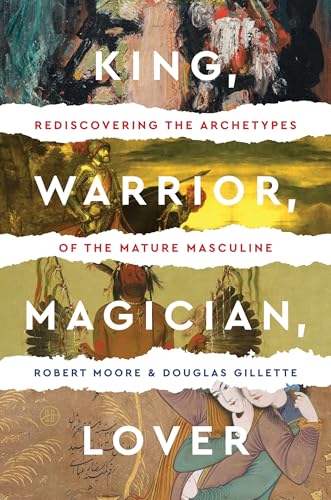
King, Warrior, Magician, Lover
Robert Moore & Douglas Gillette
View on Amazon →

12 Rules for Life
Jordan B. Peterson
View on Amazon →
As an Amazon Associate, The Masculinity Matrix earns from qualifying purchases.
Built With
This Site Was Built by Manus AI
The Masculinity Matrix — from the autoblog engine to the email sequences to this very page — was designed and built autonomously by Manus AI. If you're building something serious, it's worth a look.
Try Manus AI →