masculinity · personal development · identity
The Identity Crisis Men Face at 30, 40, and 50 — And How to Navigate Each One
C. V. WoosterMarch 30, 202626 min read
*This article contains Amazon affiliate links. If you purchase through them, The Masculinity Matrix earns a small commission at no extra cost to you.*
# The Identity Crisis Men Face at 30, 40, and 50 — And How to Navigate Each One
**The identity crisis men face at 30, 40, and 50 is a profound period of self-reassessment, often triggered by unmet expectations, shifting life priorities, or the stark realization of aging and mortality.** These pivotal decades compel men to confront the gap between their youthful aspirations and current realities, demanding a redefinition of purpose, meaning, and masculine identity in a world that constantly evolves. Navigating these crises successfully is crucial for men today to forge a resilient, authentic self, moving beyond societal pressures to embrace a deeper, more integrated sense of self.
## Table of Contents
1. [The Shifting Sands of Masculine Identity: An Introduction](#the-shifting-sands-of-masculine-identity-an-introduction)
2. [The 30s Identity Crisis: The Weight of Expectations](#the-30s-identity-crisis-the-weight-of-expectations)
3. [The 40s Identity Crisis: The Midlife Reckoning](#the-40s-identity-crisis-the-midlife-reckoning)
4. [The 50s Identity Crisis: The Wisdom of Impermanence](#the-50s-identity-crisis-the-wisdom-of-impermanence)
5. [Navigating the Crises: A Framework for Growth](#navigating-the-crises-a-framework-for-growth)
6. [Reclaiming Your Narrative: Beyond the Crisis](#reclaiming-your-narrative-beyond-the-crisis)
7. [The Continuous Evolution of Manhood](#the-continuous-evolution-of-manhood)
## The Shifting Sands of Masculine Identity: An Introduction
From the earliest myths to contemporary psychology, the journey of a man has been depicted as a series of trials, transformations, and awakenings. Unlike the linear progression often imagined in youth, the path to mature masculinity is fraught with periods of intense questioning, often manifesting as an identity crisis. These aren't failures of character but rather necessary crucibles for growth, particularly as men transition through the pivotal decades of their 30s, 40s, and 50s. Each decade presents its unique set of challenges, societal pressures, and internal conflicts that compel a man to re-evaluate who he is, what he stands for, and where he is headed.
In a rapidly changing world, where traditional masculine archetypes are being deconstructed and redefined, the modern man often finds himself adrift, searching for anchors in a sea of conflicting expectations. The stoic, unfeeling provider of yesteryear is giving way to a call for emotional intelligence and vulnerability, yet the ingrained societal scripts persist. This creates a fertile ground for identity crises, not as a sign of weakness, but as an opportunity for profound self-discovery and the forging of a more authentic, integrated self. Understanding the specific contours of these crises at each stage is the first step toward navigating them with intention and emerging stronger.
This article will delve into the distinct characteristics of the identity crisis men face at 30, 40, and 50, exploring the psychological, social, and existential dimensions of each. More importantly, it will provide philosophical insights and practical strategies for not just surviving these periods of upheaval, but for harnessing them as catalysts for deep personal development and the construction of a meaningful, resilient masculine identity.
### The Modern Man's Labyrinth
The contemporary landscape for men is a complex tapestry of inherited expectations, progressive ideals, and personal aspirations. Men are often told to be strong, yet vulnerable; successful, yet present; traditional, yet adaptable. This labyrinth of conflicting messages can lead to a profound sense of confusion, particularly when external markers of success – career, family, possessions – fail to deliver internal fulfillment. The identity crisis, in this context, is less about a sudden breakdown and more about a gradual erosion of a previously held self-concept that no longer serves. It's the moment when the map you've been following no longer matches the terrain.
### The Call to Self-Reflection
Jungian psychology speaks of individuation, the process by which a person becomes a whole, integrated individual, distinct from the collective psyche. This process is rarely smooth; it involves confronting the shadow, integrating disparate parts of the self, and shedding outdated identities. The identity crises of the 30s, 40s, and 50s are crucial junctures in this individuation journey. They are the universe's way of calling a man to deeper self-reflection, to look beyond the superficial roles and expectations, and to uncover the authentic core of his being. This introspection is not merely an intellectual exercise but an emotional and spiritual quest that demands courage and honesty.
### Beyond Societal Scripts
Many men construct their identity around external achievements and societal approval. They chase career milestones, accumulate wealth, strive for physical prowess, or seek validation through relationships. While these pursuits can be meaningful, they often become substitutes for genuine self-knowledge. When these external pillars inevitably shift or prove insufficient, the foundation of identity can crumble. The crises we discuss are opportunities to move beyond these societal scripts, to question the narratives imposed by culture, family, and peers, and to write one's own story. This involves a conscious effort to define success, purpose, and happiness on one's own terms, rather than inheriting them.
## The 30s Identity Crisis: The Weight of Expectations
The 30s often arrive with a heavy briefcase of expectations. For many men, this decade is about solidifying career paths, establishing families, and achieving a certain level of financial stability. The youthful idealism of the 20s confronts the often-harsh realities of adult responsibility. This period is characterized by a potent mix of ambition and anxiety, as men grapple with the pressure to "have it all figured out." The identity crisis at 30 is less about a sudden collapse and more about a slow, creeping doubt that the path chosen is the right one, or that the man he is becoming aligns with the man he truly wants to be.
### The Pressure Cooker of Performance
By their early 30s, men are often deep into their careers, facing increased responsibilities, longer hours, and the relentless pursuit of advancement. The societal narrative often dictates that this is the time to "make your mark," to climb the ladder, and to prove one's worth in the professional sphere. This pressure cooker environment can lead to burnout, disillusionment, and a profound questioning of whether the sacrifices are truly worth the rewards. The identity crisis here often manifests as a feeling of being trapped in a golden cage, where external success masks internal emptiness. Men may find themselves asking, "Is this all there is?" or "Am I just a cog in the machine?" This internal conflict can be exacerbated by comparing oneself to peers who appear to be more successful, happier, or more settled, leading to feelings of inadequacy and self-doubt. The pursuit of external validation, whether through promotions or material possessions, often leaves a void when the underlying purpose is unclear.
### Family, Fatherhood, and Freedom
For many men, the 30s also bring significant shifts in personal life, particularly the establishment of a family and the advent of fatherhood. While these experiences can be profoundly fulfilling, they also represent a monumental shift in identity and priorities. The carefree bachelor of the 20s must now contend with the responsibilities of partnership and parenthood, often feeling a loss of personal freedom and autonomy. This transition can be jarring, leading to questions about one's role as a husband, partner, and father. The identity crisis emerges when the man struggles to integrate these new roles with his pre-existing self-concept, or when he feels overwhelmed by the demands placed upon him. The tension between providing for his family and maintaining his own sense of self can become a significant source of internal conflict, leading some to feel resentful or lost in the shuffle of domestic life.
### The Unfulfilled Dream
The 30s are also a time when the dreams and aspirations of youth come face-to-face with reality. Perhaps a man envisioned himself as a rock star, a world traveler, or a groundbreaking artist, but now finds himself in a cubicle, commuting daily. This confrontation with the "road not taken" can trigger a deep sense of regret and a questioning of past choices. The identity crisis here is about reconciling the ideal self with the actual self, and mourning the loss of potential futures. It's not necessarily about abandoning current responsibilities but about finding a way to integrate elements of those unfulfilled dreams into present life, or to consciously choose a new direction. This requires honest self-assessment, courage to acknowledge disappointment, and the wisdom to understand that identity is not static but a continuous process of becoming.
---
**📚 Recommended Reading:** The Way of the Superior Man
This book offers a radical perspective on masculine spirituality and purpose, challenging men to live with integrity, passion, and presence, which is invaluable when navigating the pressures of the 30s.
[Amazon link: https://www.amazon.com/dp/1622038320?tag=seperts-20]
---
## The 40s Identity Crisis: The Midlife Reckoning
The 40s are often synonymous with the "midlife crisis," a term that, while sometimes caricatured, points to a very real and often profound period of self-examination. This decade marks a significant turning point, as men begin to confront their mortality, the limitations of their physical bodies, and the finite nature of time. The identity crisis in the 40s is less about external pressures and more about an internal reckoning – a deep dive into existential questions about meaning, legacy, and what truly matters. It's the moment when the man realizes he's past the halfway point, and the future, once an infinite expanse, now has a visible horizon.
### Confronting Mortality and the Body
As men enter their 40s, the first signs of aging become more apparent. The metabolism slows, hair recedes or grays, and the physical prowess of youth begins to wane. This confrontation with the aging body can trigger a profound identity crisis, especially for men whose self-worth has been heavily tied to their physical strength, appearance, or athletic abilities. It forces a re-evaluation of what it means to be strong, capable, and vital. Beyond the physical, the 40s often bring a heightened awareness of mortality, perhaps through the loss of parents, mentors, or friends. This existential confrontation compels men to ask fundamental questions about the meaning of life, their purpose, and what kind of legacy they wish to leave behind. The crisis here is about accepting the inevitability of change and finding new sources of self-esteem and meaning that transcend the transient nature of the physical self.
### The Search for Meaning and Legacy
Having often achieved significant professional or personal milestones by their 40s, many men find that external successes no longer provide the same satisfaction. The pursuit of wealth, status, or power, once motivating forces, can begin to feel hollow. This leads to a deep yearning for meaning and purpose beyond the material. The identity crisis of the 40s often manifests as a spiritual or existential void, prompting men to seek deeper connections, engage in philanthropic endeavors, or explore new passions that align with their values. It's a period of questioning the "why" behind their actions and seeking to contribute something lasting to the world. This search for legacy is not just about what they leave behind, but about how they live the remainder of their lives, ensuring it is aligned with their deepest values and convictions.
### Re-evaluating Relationships and Roles
The 40s can also be a time of significant re-evaluation in personal relationships. Marriages may feel stale, friendships may have drifted, and the dynamics with children shift as they become more independent. The identity crisis here involves re-negotiating roles within the family, rekindling intimacy, or even facing the difficult decision to end relationships that no longer serve one's growth. Men may find themselves questioning the authenticity of their connections and seeking deeper, more meaningful bonds. This period can also involve a re-connection with one's own parents, seeing them not just as authority figures but as aging individuals, which can bring its own set of emotional challenges and opportunities for healing. The crisis pushes men to cultivate relationships that are genuinely supportive and reflective of their evolving self.
## The 50s Identity Crisis: The Wisdom of Impermanence
Entering the 50s, men often find themselves on the precipice of another significant life stage. Children may be leaving home, retirement looms on the horizon, and the professional landscape might be shifting. The identity crisis at 50 is characterized by a profound confrontation with the past, a redefinition of purpose outside of traditional roles, and an embrace of the wisdom that comes with age. It's a period of letting go, of integrating life's experiences, and of consciously choosing how to live the "third act" of life. This crisis is less about regret and more about acceptance, synthesis, and the cultivation of inner peace.
### The Empty Nest and Shifting Purpose
For many men in their 50s, the "empty nest" syndrome becomes a reality as children leave home to forge their own lives. While this can bring a newfound sense of freedom, it can also trigger a profound identity crisis, especially for men whose primary identity has been tied to their role as a father and provider. The sudden absence of daily responsibilities can leave a void, prompting questions about one's purpose and relevance. This crisis demands a redefinition of purpose that extends beyond parental duties. It's an opportunity to rediscover hobbies, passions, and interests that may have been sidelined for decades, or to embark on entirely new ventures. The challenge is to embrace this new phase not as an ending, but as a beginning, a time for self-actualization and contribution in different forms.
### Retirement, Relevance, and Renewal
As retirement approaches, men in their 50s often face a significant identity shift. For those whose self-worth has been heavily invested in their professional identity, the prospect of leaving the workforce can be daunting. The crisis here is about grappling with a potential loss of status, routine, and social connection. It forces a man to ask: "Who am I, if not my job title?" The challenge is to find new avenues for relevance and contribution, whether through volunteer work, mentorship, entrepreneurial pursuits, or creative endeavors. This period is not about disengagement but about renewal – finding new ways to engage with the world and leverage a lifetime of experience and wisdom. It requires a proactive approach to planning for a fulfilling post-career life, rather than passively allowing it to happen.
### Integrating the Past and Embracing the Future
The 50s are a time for reflection and integration. Men often look back on their lives, reviewing successes, failures, joys, and regrets. This process can be therapeutic, but also painful, as it involves confronting past choices and their consequences. The identity crisis here is about making peace with one's past, forgiving oneself and others, and synthesizing all life experiences into a coherent narrative. It's about understanding that every chapter, good or bad, has contributed to the man he has become. Simultaneously, it's about embracing the future with a sense of calm and acceptance, understanding that life is impermanent and that wisdom lies in living fully in the present. This involves cultivating a philosophical perspective, perhaps drawing from Stoicism or other wisdom traditions, to find tranquility amidst life's inevitable changes.
---
**📚 Recommended Reading:** Man's Search for Meaning
Viktor Frankl's profound exploration of finding meaning in suffering and purpose in life is an essential guide for men grappling with existential questions in their 40s and 50s.
[Amazon link: https://www.amazon.com/dp/080701429X?tag=seperts-20]
---
## Navigating the Crises: A Framework for Growth
An identity crisis, while unsettling, is not a terminal condition but a powerful catalyst for growth. Each decade presents a unique set of challenges, but the underlying principles for navigating them remain consistent: self-awareness, intentional action, and a commitment to continuous personal development. The Masculinity Matrix posits that true strength lies not in avoiding these crises, but in confronting them with courage and philosophical rigor. Here's a framework for men to navigate these transformative periods.
### Step 1 of 5: Cultivate Radical Self-Awareness
The first step in navigating any identity crisis is to understand its roots. This requires a deep, honest introspection into your values, beliefs, desires, and fears. What societal scripts have you internalized? What expectations are truly yours, and which have been imposed? Journaling, meditation, and honest conversations with trusted confidantes can be powerful tools for this self-exploration.
* **Journaling:** Regularly writing down thoughts, feelings, and questions without judgment can reveal patterns, unearth hidden desires, and clarify sources of discontent. It's a direct line to your subconscious.
* **Mindfulness & Meditation:** Practices that cultivate present-moment awareness can help men observe their thoughts and emotions without getting swept away by them, creating space for clarity and insight.
* **Feedback from Trusted Sources:** Seek out individuals who know you well and can offer honest, constructive feedback. This external perspective can highlight blind spots and confirm emerging truths about your identity.
### Step 2 of 5: Re-evaluate Your Values and Purpose
Once self-aware, the next step is to critically examine your core values. Are you living in alignment with what truly matters to you? Often, identity crises arise when there's a significant misalignment between one's actions and one's deepest values. This is also the time to redefine your purpose beyond external markers of success.
* **Value Clarification Exercises:** List your top 5-7 core values (e.g., integrity, freedom, family, contribution, creativity). Then, assess how your daily life and major decisions reflect these values. Where are the discrepancies?
* **Purpose Redefinition:** Move beyond "what do I do?" to "why do I do it?" and "what impact do I want to have?" This might involve exploring new interests, volunteering, or re-framing your current work in a more meaningful way.
* **Vision Casting:** Imagine your ideal self and life five, ten, twenty years from now. What does it look like? Feel like? What kind of man are you? This vision provides a compass for future decisions.
### Step 3 of 5: Embrace the Shadow and Integrate the Self
Carl Jung's concept of the "shadow" refers to the unconscious aspects of the self that are often repressed or denied. During an identity crisis, these unacknowledged parts often surface, demanding attention. Embracing the shadow means acknowledging your flaws, weaknesses, and undesirable traits, not to wallow in them, but to integrate them into a more complete and authentic self.
* **Acknowledge Imperfections:** Recognize that true strength includes acknowledging vulnerability and imperfection. Suppressing these aspects only makes them more powerful in the unconscious.
* **Heal Past Wounds:** Many identity crises are rooted in unresolved childhood issues or past traumas. Therapy, coaching, or deep self-reflection can help process and heal these wounds, preventing them from dictating your present and future.
* **Integrate Archetypes:** Explore the various masculine archetypes (King, Warrior, Magician, Lover) and assess which ones are over- or under-developed in your life. Strive for a balanced integration to become a more whole man.
### Step 4 of 5: Build a Resilient Support System
No man is an island, and navigating an identity crisis alone can be isolating and overwhelming. A strong support system is crucial for providing perspective, encouragement, and accountability. This includes cultivating meaningful relationships and seeking professional guidance when necessary.
* **Cultivate Authentic Friendships:** Surround yourself with men who challenge you, support you, and hold you to a higher standard. These are the men who will walk with you through the fire.
* **Seek Mentorship:** Find men who have successfully navigated similar life stages or challenges. Their wisdom and experience can provide invaluable guidance and a roadmap for your own journey.
* **Professional Guidance:** Don't hesitate to seek out a therapist, coach, or spiritual advisor. These professionals can provide tools, insights, and a safe space to process complex emotions and strategize your path forward.
### Step 5 of 5: Take Intentional Action and Adapt
Self-awareness and introspection are vital, but without action, they remain theoretical. Navigating an identity crisis requires making conscious choices and taking concrete steps to align your life with your evolving identity. This often involves making difficult decisions and embracing change.
* **Set Clear Goals:** Based on your clarified values and purpose, set specific, measurable, achievable, relevant, and time-bound (SMART) goals that move you towards your desired future.
* **Embrace Discomfort:** Growth often happens outside the comfort zone. Be willing to take risks, try new things, and challenge old habits, even if it feels uncomfortable or uncertain.
* **Practice Adaptability:** Life is fluid. Be prepared to adjust your course, learn from setbacks, and continuously refine your identity as you gain new experiences and insights. The journey is ongoing.
### Comparison of Crisis Decades and Navigation Strategies
| Feature | 30s Identity Crisis | 40s Identity Crisis | 50s Identity Crisis |
| :---------------------- | :---------------------------------------------------- | :-------------------------------------------------- | :-------------------------------------------------- |
| **Primary Trigger** | External expectations, career pressure, family formation | Midlife reckoning, mortality, meaning, legacy | Empty nest, retirement, relevance, past integration |
| **Core Question** | "Am I on the right path? Am I becoming who I want to be?" | "What is my purpose? What truly matters?" | "Who am I beyond my roles? How do I live my 'third act'?" |
| **Common Feelings** | Anxiety, doubt, feeling trapped, comparison, regret | Existential angst, hollowness, urgency, disillusionment | Loss, liberation, reflection, acceptance, peace |
| **Key Challenge** | Aligning ambition with authenticity, managing responsibility | Redefining success, finding deeper meaning, confronting aging | Redefining purpose, embracing impermanence, legacy creation |
| **Navigation Focus** | Self-awareness, value clarification, setting boundaries | Existential inquiry, spiritual exploration, health & wellness | Legacy planning, new passions, relationship renewal |
| **Recommended Action** | Journaling, mentorship, skill development, financial planning | Therapy, travel, new hobbies, community involvement | Volunteering, creative pursuits, philosophical study |
## Reclaiming Your Narrative: Beyond the Crisis
An identity crisis is often experienced as a period of fragmentation, where the old self dissolves before a new one has fully formed. This liminal space can be disorienting, but it also presents a profound opportunity to reclaim and rewrite your personal narrative. Instead of being a passive recipient of life's circumstances, you become the active author of your story. This involves consciously choosing the themes, characters, and direction of your future, grounded in an authentic understanding of who you are. The process of navigating these crises is not just about surviving them, but about emerging with a stronger, more coherent, and more resilient sense of self.
### The Power of Storytelling
Humans are inherently storytellers. We make sense of the world and our place in it through narratives. During an identity crisis, the old narrative often breaks down, leaving a void. Reclaiming your narrative involves consciously constructing a new story that integrates your past experiences, present realities, and future aspirations. This new narrative should reflect your evolved values and purpose, providing a guiding framework for your decisions and actions. It's about understanding that while you cannot change the past, you can change its meaning and its impact on your present and future. This is a powerful act of self-authorship, transforming victimhood into agency.
### Forging a Coherent Self
A coherent self is one where various aspects of your identity – professional, personal, spiritual, relational – are integrated into a harmonious whole. An identity crisis often highlights the incoherence, where different parts of your life feel disconnected or in conflict. Reclaiming your narrative is about weaving these threads together, finding the underlying themes and values that connect them. This doesn't mean erasing complexity or contradiction, but rather understanding how these elements contribute to the richness of your unique identity. It's about developing an internal compass that guides you consistently across all domains of your life, fostering a sense of inner peace and integrity.
### The Checklist for Reclaiming Your Narrative
✅ **Identify Your Core Values:** What principles truly guide your life? Write them down and evaluate how well your current actions align with them.
✅ **Reflect on Your Past:** What lessons have you learned? What experiences have shaped you most profoundly? How can you reframe past challenges as sources of strength?
✅ **Articulate Your Purpose:** Beyond daily tasks, what is your overarching "why"? What impact do you want to have on the world, your family, or your community?
✅ **Visualize Your Future Self:** Who do you aspire to be in 5, 10, 20 years? What qualities do you possess? What kind of life are you living?
✅ **Craft Your Personal Mission Statement:** A concise statement that encapsulates your values, purpose, and vision for your life.
✅ **Identify Limiting Beliefs:** What negative self-talk or outdated beliefs are holding you back? Challenge them and replace them with empowering affirmations.
✅ **Seek Feedback:** Share your evolving narrative with trusted friends, mentors, or a therapist to gain perspective and refine your story.
✅ **Take Aligned Action:** Begin to make choices, big and small, that are consistent with your new narrative, reinforcing your evolving identity.
## The Continuous Evolution of Manhood
The journey through the identity crises of the 30s, 40s, and 50s is not a destination but a continuous process of evolution. Masculinity, in its most profound sense, is not a static ideal but a dynamic interplay of archetypes, experiences, and conscious choices. Each crisis, when navigated with intention, refines and deepens a man's understanding of himself and his place in the world. It moves him beyond rigid definitions and towards a more fluid, adaptable, and authentic expression of his being. This ongoing evolution is the essence of true personal development, allowing men to age with grace, wisdom, and a profound sense of purpose.
### Beyond the Archetypes
While archetypes like the King, Warrior, Magician, and Lover provide powerful frameworks for understanding masculine energies, the mature man transcends mere adherence to these roles. He integrates them, understanding when to embody the protective strength of the Warrior, the wise counsel of the King, the insightful perception of the Magician, or the passionate connection of the Lover. The continuous evolution of manhood involves a nuanced application of these energies, adapting to the demands of life with flexibility and wisdom. It's about becoming a whole man, not just a collection of parts.
### The Wisdom of Integration
As men move through their 50s and beyond, the focus shifts from acquiring to integrating. This means synthesizing a lifetime of experiences, lessons learned, and relationships forged into a cohesive whole. It's about finding harmony between the different facets of one's identity – the professional, the familial, the spiritual, the personal. This integration leads to a sense of inner peace and resilience, allowing a man to face life's inevitable challenges with equanimity. The wisdom gained through these decades of self-discovery becomes a guiding light, not just for himself, but for those he leads and influences.
### A Legacy of Authenticity
Ultimately, the successful navigation of identity crises across these decades culminates in a legacy of authenticity. It's a testament to a life lived with intention, courage, and a commitment to truth. This legacy is not merely about material possessions or external achievements, but about the quality of character, the depth of relationships, and the impact made on the lives of others. The man who embraces his continuous evolution leaves behind not just a story of success, but a story of genuine self-discovery and the enduring power of the human spirit. This is the true promise of confronting and mastering the identity crisis men face at 30, 40, and 50.
---
**📚 Recommended Reading:** Meditations
Marcus Aurelius's timeless wisdom on Stoicism offers profound insights into self-mastery, resilience, and finding tranquility amidst life's challenges, essential for navigating the later-life identity crises.
[Amazon link: https://www.amazon.com/dp/0812968255?tag=seperts-20]
---
You can explore more insights into masculine identity and personal growth by visiting [The Masculinity Matrix](https://themasculinitymatrix.com) or by checking out [Browse all Field Notes](https://themasculinitymatrix.com/blog) for a wealth of articles designed to empower men on their journey.
## Frequently Asked Questions
**Q: What is the primary cause of an identity crisis in men?**
A: The primary cause is often a significant misalignment between a man's internal self-concept and external realities or expectations. This can be triggered by life transitions, unmet aspirations, or a confrontation with mortality, leading to a profound questioning of purpose and self.
**Q: Is an identity crisis a sign of weakness?**
A: Absolutely not. An identity crisis is a natural and often necessary phase of psychological and spiritual growth. It indicates a readiness for deeper self-awareness and personal evolution, challenging outdated self-concepts to make way for a more authentic identity.
**Q: How do the identity crises at 30, 40, and 50 differ?**
A: At 30, it's often about external pressures (career, family) and reconciling youthful dreams with reality. At 40, it's a deeper existential reckoning with mortality and meaning. At 50, it's about redefining purpose post-parenthood/career and integrating life experiences.
**Q: Can women experience similar identity crises at these ages?**
A: Yes, while the specific triggers and societal pressures may differ, women also experience significant identity shifts and crises at various life stages, particularly around these decades, often related to career, family, aging, and societal roles.
**Q: What role does societal pressure play in these crises?**
A: Societal pressures significantly contribute by setting often unrealistic benchmarks for success, happiness, and masculine ideals. When men fail to meet these or find them unfulfilling, it can trigger a crisis, forcing them to question external definitions of worth.
**Q: What is the most important step a man can take to navigate an identity crisis?**
A: The most important step is cultivating radical self-awareness. This involves deep introspection to understand one's true values, desires, and fears, which then forms the foundation for intentional action and redefining purpose.
**Q: How can I support a friend or partner going through an identity crisis?**
A: Offer empathetic listening without judgment, encourage self-reflection, and suggest professional support if needed. Validate their feelings and remind them that this is a normal part of growth, not a personal failing.
**Q: Are there any positive outcomes of an identity crisis?**
A: Yes, profound positive outcomes. Successfully navigating an identity crisis leads to greater self-awareness, a stronger sense of purpose, more authentic relationships, increased resilience, and a deeper, more integrated sense of self.
## Conclusion + CTA
The identity crisis men face at 30, 40, and 50 are not anomalies but integral rites of passage in the journey of mature masculinity. Each decade presents a unique crucible, demanding a re-evaluation of self, purpose, and values. While these periods can be unsettling, they are ultimately invitations to shed outdated skins, confront uncomfortable truths, and forge a more authentic and resilient identity. By cultivating radical self-awareness, re-evaluating values, embracing the shadow, building robust support systems, and taking intentional action, men can transform these crises from periods of confusion into powerful catalysts for profound personal growth. The path to a meaningful life is rarely linear, and these pivotal moments of questioning are precisely where true wisdom and self-mastery are forged. To navigate them successfully is to embrace the continuous evolution of manhood, becoming not just older, but deeper, wiser, and more authentically yourself.
The Masculinity Matrix releases October 1, 2026. [Join the early access list](https://themasculinitymatrix.com/#newsletter) to be notified the moment it drops — and get the free 20-page reader magnet *The Five Masculine Wounds* instantly.
Continue Reading
MM
masculinity
How to Find Your Life's Purpose: A Philosophical Framework for Men in 2024
Mar 30, 202623 min
MM
masculinity
Why Vulnerability Is Not Weakness: The Modern Man's Misconception in 2024
Mar 30, 202621 min
MM
masculinity
The Modern Man's Guide to Accountability: How to Stop Making Excuses in 2024
Mar 30, 202627 min
Further Reading

The Rational Male
Rollo Tomassi
View on Amazon →

The Way of the Superior Man
David Deida
View on Amazon →
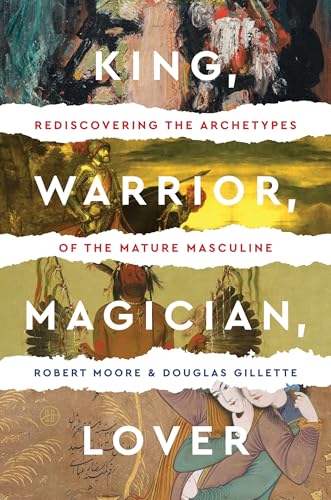
King, Warrior, Magician, Lover
Robert Moore & Douglas Gillette
View on Amazon →
As an Amazon Associate, The Masculinity Matrix earns from qualifying purchases.