masculinity · personal development · stoicism
Emotional Stoicism vs. Emotional Intelligence: What Men Actually Need in 2026
Emotional Stoicism vs. Emotional Intelligence: What Men Actually Need in 2026
Emotional Stoicism is the disciplined practice of managing one's internal emotional landscape, often characterized by a calm, rational response to external events, while Emotional Intelligence is the capacity to understand and manage one's own emotions and to perceive, understand, and influence the emotions of others. For men navigating the complexities of modern identity in 2026, the synthesis of these two powerful frameworks offers a robust path to genuine strength, profound connection, and authentic self-mastery. This integrated approach moves beyond outdated notions of emotional repression, fostering a masculinity that is both resilient and deeply empathetic.
Table of Contents
- The Shifting Sands of Masculine Identity: A 2026 Perspective
- Deconstructing Emotional Stoicism: The Ancient Path to Inner Fortitude
- Unpacking Emotional Intelligence: The Modern Imperative for Connection
- The False Dichotomy: Why It's Not Either/Or
- Integrating the Archetypes: A Framework for the Modern Man
- Cultivating the Integrated Man: Practical Steps for 2026
- The Future of Masculine Emotional Mastery
The Shifting Sands of Masculine Identity: A 2026 Perspective
The landscape of male identity in 2026 is a complex tapestry, woven with threads of traditional expectations, evolving social norms, and the relentless pace of technological and cultural change. Men today are often caught between conflicting ideals: the stoic, unyielding provider of yesteryear, and the emotionally literate, empathetic partner and leader of tomorrow. This tension creates a unique challenge, demanding a nuanced understanding of emotional mastery that transcends simplistic binaries. The old paradigm, often misconstruing stoicism as emotional suppression, left men isolated and unequipped for the relational demands of a connected world. Conversely, a superficial embrace of "emotional intelligence" without the bedrock of inner discipline can lead to performative empathy or a lack of resilience in the face of adversity. The true need for men in 2026 lies in a sophisticated integration, a synthesis that allows for both profound inner strength and genuine outer connection. This article will explore how emotional stoicism and emotional intelligence, when properly understood and combined, offer the most robust framework for masculine development.
The Erosion of Traditional Masculine Archetypes
For centuries, masculine archetypes provided clear, if sometimes rigid, blueprints for male behavior. The warrior, the provider, the protector – these roles, while powerful, often implicitly discouraged emotional expression beyond anger or grim determination. In 2026, these archetypes are under scrutiny, and rightfully so. The societal demand for men to be more present, more communicative, and more emotionally available has grown exponentially. This shift, while healthy in many respects, has left many men feeling adrift, unsure of how to reconcile the innate drive for strength and purpose with the new expectations for emotional openness. The challenge is not to abandon these archetypes but to re-interpret them through a modern lens, understanding that true strength encompasses emotional depth, not just physical prowess or material provision.
The Digital Age and Emotional Disconnect
The pervasive influence of social media and digital communication has paradoxically created both unprecedented connectivity and profound emotional isolation. Men, in particular, can fall prey to curated online personas, where vulnerability is often perceived as weakness, and genuine emotional processing is replaced by superficial engagement or performative outrage. This environment exacerbates the existing challenges of emotional expression, making it harder for men to cultivate authentic relationships and develop a robust inner life. The constant bombardment of information and comparison can lead to anxiety, depression, and a sense of inadequacy, highlighting the urgent need for tools that foster inner resilience and genuine self-awareness, rather than just outward presentation.
The Call for Authentic Strength
The modern man is not looking for a return to an unexamined past, nor is he seeking to shed his masculinity in favor of a gender-neutral ideal. Instead, there is a profound yearning for authentic strength – a masculinity that is robust, purposeful, and deeply human. This strength is not defined by the absence of emotion, but by the mastery of it; not by isolation, but by the capacity for deep, meaningful connection. It is a strength that allows a man to face adversity with courage, to lead with integrity, and to love with an open heart. Achieving this requires a deliberate cultivation of both inner discipline and outward empathy, precisely where the synergy of emotional stoicism and emotional intelligence becomes indispensable.
Deconstructing Emotional Stoicism: The Ancient Path to Inner Fortitude
Emotional Stoicism, rooted in the ancient Greek philosophy of Stoicism, is often misunderstood as a call for emotional repression. In reality, it is a sophisticated framework for emotional regulation and resilience. At its core, Stoicism teaches us to distinguish between what is within our control and what is not. Our judgments, our impulses, our desires, and our aversions are within our control; external events, the actions of others, and even our own physical health are largely beyond it. The Stoic ideal is not to eliminate emotions, but to understand their nature, to prevent them from dictating our actions, and to cultivate a state of inner tranquility (ataraxia) through reason and virtue. For men in 2026, this ancient wisdom offers a powerful antidote to the anxieties and uncertainties of modern life, providing a foundation of unshakeable inner peace.
The Dichotomy of Control: Mastering Your Inner World
The central tenet of Stoicism is the "Dichotomy of Control." Epictetus famously stated, "Some things are in our control and others are not." This simple yet profound idea is the bedrock of emotional stoicism. It teaches men to focus their energy and attention solely on what they can influence – their thoughts, their reactions, their character – and to accept with equanimity that which they cannot. This isn't about apathy; it's about strategic allocation of mental and emotional resources. When a man internalizes this principle, he gains an immense sense of agency. He stops being a victim of circumstance and becomes the architect of his inner life. This practice is crucial for navigating professional setbacks, relational challenges, and the general unpredictability of existence, fostering a deep sense of calm amidst chaos.
Emotional Regulation, Not Repression
A common misconception is that Stoicism advocates for the suppression of emotions. This is inaccurate. Stoics recognized the naturalness of emotions but sought to prevent them from becoming destructive passions (pathē). The goal is not to feel nothing, but to feel appropriately and to respond rationally. When anger arises, a Stoic doesn't deny it; he observes it, questions its root, and prevents it from leading to impulsive, regrettable actions. When grief strikes, he acknowledges the pain but reminds himself of the impermanence of all things and the virtue of acceptance. This active process of observation, analysis, and reasoned response is a far cry from simply "stuffing it down." It is a sophisticated form of emotional intelligence applied to one's internal landscape, allowing for genuine feeling without being enslaved by it.
The Cultivation of Virtue and Character
Beyond emotional regulation, Stoicism is a philosophy of virtue. The four cardinal virtues – Wisdom, Courage, Justice, and Temperance – serve as guiding principles for a well-lived life. For men, these virtues provide a robust framework for character development. Wisdom involves understanding what is good, bad, and indifferent. Courage is not the absence of fear, but the willingness to act rightly despite it. Justice is treating others fairly and contributing to the common good. Temperance is self-control and moderation in all things. By striving for these virtues, a man builds an inner citadel of character that is impervious to external fluctuations. This moral compass provides direction and meaning, grounding him in a sense of purpose that transcends fleeting pleasures or external validation.
📚 Recommended Reading: Meditations by Marcus Aurelius
This timeless classic offers a direct window into the mind of a Roman Emperor grappling with leadership, loss, and the human condition through the lens of Stoic philosophy. It's an essential guide for any man seeking inner peace and practical wisdom.
[Amazon link: https://www.amazon.com/dp/0812968255?tag=seperts-20]
Unpacking Emotional Intelligence: The Modern Imperative for Connection
Emotional Intelligence (EQ), popularized by Daniel Goleman, refers to the ability to understand, use, and manage one's own emotions in positive ways to relieve stress, communicate effectively, empathize with others, overcome challenges, and defuse conflict. It encompasses self-awareness, self-regulation, motivation, empathy, and social skills. While Stoicism focuses heavily on the internal landscape, EQ extends this understanding to the relational sphere, emphasizing the importance of emotions in navigating social interactions and building meaningful connections. For men in 2026, where collaboration, leadership, and authentic relationships are paramount, developing high emotional intelligence is not just beneficial; it is a fundamental requirement for success and fulfillment in both personal and professional domains.
Self-Awareness: The Foundation of EQ
The first pillar of Emotional Intelligence is self-awareness – the ability to recognize and understand one's own moods, emotions, and drives, as well as their effect on others. For men, this often involves unlearning years of conditioning that taught them to ignore or suppress their feelings. Self-awareness means being able to identify, for instance, that a feeling of irritation is actually rooted in unaddressed stress, or that a sudden surge of anger is a protective response to perceived disrespect. It requires honest introspection and a willingness to sit with uncomfortable emotions rather than immediately reacting to them. Without this foundational understanding of one's inner state, attempts at self-regulation or empathy will remain superficial, lacking genuine depth and authenticity.
Empathy and Social Skills: Bridging the Relational Gap
Beyond understanding oneself, Emotional Intelligence emphasizes the capacity for empathy – the ability to understand and share the feelings of another. For men, cultivating empathy means moving beyond intellectual understanding to a genuine appreciation of another person's perspective and emotional state. This is crucial for building strong relationships, whether with a partner, children, friends, or colleagues. Coupled with empathy are social skills, which involve managing relationships, inspiring others, and handling conflict effectively. These skills are not about being "nice" or passive; they are about effective communication, active listening, and the ability to influence and negotiate with integrity. In 2026, where diverse perspectives and collaborative efforts define success, these relational competencies are invaluable assets for any man.
Motivation and Self-Regulation: Directing Your Inner Drive
Emotional Intelligence also includes motivation – not just external incentives, but an intrinsic drive to achieve, a passion for work itself, and an optimism that persists through setbacks. This internal wellspring of drive is distinct from mere ambition; it's about aligning one's actions with deeply held values and purpose. Hand-in-hand with motivation is self-regulation, which is about controlling or redirecting disruptive impulses and moods, and the propensity to suspend judgment – to think before acting. This aspect of EQ is where it most directly overlaps with emotional stoicism. While Stoicism provides the philosophical framework for self-regulation, EQ offers practical tools and a psychological understanding of its mechanisms, enabling men to channel their emotional energy constructively rather than letting it derail their goals or relationships.
The False Dichotomy: Why It's Not Either/Or
The common perception often pits Emotional Stoicism against Emotional Intelligence as opposing forces: the unfeeling, rational automaton versus the empathetic, emotionally expressive individual. This is a false dichotomy, a misunderstanding born from a superficial grasp of both philosophies. In reality, they are not mutually exclusive but rather complementary aspects of a mature, integrated masculinity. A man who is genuinely stoic in the classical sense is not devoid of emotion; he is simply not ruled by it. He understands his emotions, processes them, and chooses his response based on reason and virtue. This internal mastery is precisely what allows for authentic emotional intelligence – the capacity to truly understand and connect with others without being overwhelmed by their emotions or his own. In 2026, men do not need to choose; they need to synthesize.
Misconceptions of Stoicism: Beyond the "Strong, Silent Type"
The popular image of the "strong, silent type" often misrepresents Stoicism as emotional suppression. This caricature suggests that a man should never show weakness, never express pain, and always maintain an unreadable facade. This is not Stoicism; it is emotional repression, which is psychologically damaging and relationally isolating. True Stoicism, as practiced by figures like Marcus Aurelius, involves a deep internal dialogue, a rigorous examination of one's judgments, and a conscious effort to live in accordance with reason and nature. A Stoic feels pain, grief, and joy, but he does not allow these feelings to dictate his actions or compromise his character. He understands that while emotions are natural, becoming a slave to them is not virtuous. This distinction is critical for men to embrace a healthy form of emotional resilience.
The Limits of Unregulated Empathy
On the other side of the spectrum, an overemphasis on "emotional intelligence" without a foundation of self-regulation can lead to its own set of problems. Unregulated empathy, for instance, can result in emotional exhaustion, codependency, or a lack of boundaries. A man who is overly susceptible to the emotions of others, without the inner fortitude to maintain his own emotional equilibrium, can become easily manipulated or overwhelmed. He might struggle to make difficult decisions, to hold firm boundaries, or to lead effectively when faced with emotional resistance. While empathy is vital, it must be balanced with a strong sense of self and the capacity to manage one's own emotional responses. This is where the self-regulatory aspects of emotional stoicism provide a crucial anchor.
The Synergy: A More Complete Man
When viewed correctly, emotional stoicism and emotional intelligence are two sides of the same coin: emotional mastery. Stoicism provides the internal operating system – the framework for self-awareness, self-regulation, and resilience in the face of adversity. Emotional intelligence provides the external application layer – the tools for understanding and navigating the emotional landscapes of others, fostering connection, and effective communication. A man who cultivates both is not just resilient; he is also deeply connected. He can face his own challenges with equanimity, and he can meet others with genuine understanding and compassion. This integrated approach creates a more complete, more capable, and more authentic man, perfectly suited to the demands and opportunities of 2026.
Integrating the Archetypes: A Framework for the Modern Man
To truly understand what men need in 2026, we must move beyond the superficial debate and consider how these two powerful concepts – emotional stoicism and emotional intelligence – can be integrated into a cohesive framework for masculine development. This integration is not about compromise, but about synthesis, creating a new archetype of the emotionally mature man who is both resilient and empathetic, strong and connected. This framework draws upon philosophical depth, psychological insight, and practical application, offering a roadmap for men seeking to embody a higher form of masculinity.
The Inner Citadel: Stoicism as Foundation
The first step in this integration is to establish the "inner citadel" – a concept from Stoicism referring to one's unassailable inner self, fortified by reason and virtue. This is where emotional stoicism provides the bedrock. Before a man can effectively engage with the emotions of others, he must first master his own. This involves developing a robust sense of self-awareness, the ability to regulate his emotional responses, and an unwavering commitment to his values. This inner strength ensures that his empathy is not a weakness, but a conscious choice, and that his compassion is not born of fear, but of genuine strength. Without this foundational stability, attempts at emotional intelligence can feel performative or unsustainable.
📚 Recommended Reading: The Obstacle Is the Way by Ryan Holiday
Drawing heavily from Stoic philosophy, this book provides practical, modern applications of ancient wisdom for overcoming adversity and transforming challenges into opportunities. It's a powerful guide for cultivating resilience.
[Amazon link: https://www.amazon.com/dp/1591846358?tag=seperts-20]
The Empathic Bridge: EQ as Connection
Once the inner citadel is established, emotional intelligence becomes the "empathic bridge" – the means by which a man connects his fortified inner world with the external world of relationships. This involves actively cultivating empathy, honing social skills, and developing a nuanced understanding of non-verbal communication. It means moving beyond a purely logical assessment of situations to genuinely considering the emotional impact on others. This bridge allows a man to lead with compassion, to resolve conflicts constructively, and to build relationships founded on mutual understanding and respect. It transforms his strength from an isolating force into a connective one, enabling him to be a pillar of support and understanding for those around him.
The Virtuous Cycle: Strength Inspiring Connection
The beauty of this integrated approach is that it creates a virtuous cycle. The inner strength gained through emotional stoicism makes a man more capable of genuine empathy and effective social interaction. In turn, the positive feedback and deeper connections forged through emotional intelligence reinforce his sense of purpose and well-being, further strengthening his inner resolve. This dynamic interplay ensures that neither aspect is neglected, and both are continually developed. A man who can remain calm under pressure (Stoicism) is better equipped to listen actively and respond thoughtfully to a distressed partner (EQ). A man who understands the emotional needs of his team (EQ) can lead with greater wisdom and courage (Stoicism). This synergy is what defines the truly integrated man.
Cultivating the Integrated Man: Practical Steps for 2026
Moving from theory to practice, how does a man in 2026 cultivate this integrated form of emotional mastery? It requires deliberate effort, consistent self-reflection, and a willingness to step outside of comfort zones. This isn't a quick fix but a lifelong journey of personal development. The following framework outlines actionable steps that men can take to build both their inner resilience and their relational intelligence, equipping them for the challenges and opportunities of the modern world.
Step 1 of 4: The Daily Practice of Self-Awareness
The journey begins inward. Dedicate time each day to self-reflection.
- Journaling: Spend 10-15 minutes each morning or evening writing about your thoughts, feelings, and reactions to events. Don't censor yourself; just observe. This practice helps you identify emotional patterns and triggers.
- Mindful Observation: Throughout the day, pause and notice your emotional state. Ask yourself: "What am I feeling right now? Where do I feel it in my body? What might have triggered this emotion?" This non-judgmental observation is a core Stoic practice.
- Emotional Vocabulary Expansion: Many men have a limited emotional vocabulary beyond "good," "bad," "angry," or "happy." Actively learn and use more precise terms (e.g., frustrated, anxious, content, melancholic, invigorated). This precision enhances self-understanding.
Step 2 of 4: Fortifying Your Inner Citadel with Stoic Discipline
Once aware, the next step is to cultivate inner resilience and self-regulation.
- Dichotomy of Control Application: For every challenge, explicitly identify what is within your control and what is not. Focus your energy solely on the former. Practice letting go of the need to control outcomes.
- Premeditatio Malorum (Premeditation of Evils): Regularly contemplate potential difficulties or setbacks. This isn't pessimism; it's a mental rehearsal that reduces the shock and emotional impact when adversity inevitably strikes, allowing for a more reasoned response.
- Voluntary Discomfort: Engage in small acts of voluntary discomfort (e.g., a cold shower, fasting for a meal, walking instead of driving). This builds mental toughness and reduces attachment to comfort, strengthening your resolve against emotional discomfort.
Step 3 of 4: Building the Empathic Bridge with EQ Practices
With a stable inner foundation, focus on enhancing your relational intelligence.
- Active Listening: In conversations, practice truly listening to understand, not just to reply. Put away distractions, maintain eye contact, and reflect back what you hear to confirm understanding ("So, what I'm hearing is...").
- Perspective-Taking Exercises: When faced with conflict or differing opinions, consciously try to articulate the other person's viewpoint, even if you disagree. Ask yourself: "What might be driving their feelings or actions?"
- Seeking Feedback: Actively solicit feedback on your communication and relational style from trusted friends, family, or colleagues. Be open to constructive criticism and use it as a tool for growth.
Step 4 of 4: Integrating Through Purposeful Action
The ultimate integration happens through living these principles in daily life.
- Align Actions with Values: Regularly review your core values (e.g., integrity, courage, compassion) and ensure your daily actions are consistent with them. This creates a powerful sense of purpose and authenticity.
- Practice Mindful Communication: Before speaking, especially in emotionally charged situations, pause. Ask yourself: "Is this true? Is it kind? Is it necessary? Is it helpful?" This integrates Stoic self-regulation with EQ's focus on effective communication.
- Serve Others: Engage in acts of service or mentorship. Applying your integrated emotional mastery to help others not only reinforces your own learning but also deepens your sense of connection and purpose, embodying the virtuous aspect of both philosophies.
The Future of Masculine Emotional Mastery
As we look towards 2026 and beyond, the need for men to cultivate a sophisticated understanding of their emotional lives will only intensify. The simplistic models of masculinity that either demanded emotional repression or encouraged unchecked expression are proving insufficient for the complexities of modern existence. The integrated approach, blending the profound inner fortitude of emotional stoicism with the relational acumen of emotional intelligence, offers a robust and sustainable path forward. This is not about becoming a new kind of man, but about becoming a more complete and authentic version of oneself – a man who is resilient in the face of adversity, empathetic in his relationships, and purposeful in his actions.
The Integrated Man: A New Archetype
The integrated man is the archetype for 2026. He is not afraid to feel, but he is not enslaved by his feelings. He understands that true strength lies not in the absence of emotion, but in its mastery. He is a man who can calmly navigate a crisis, yet also offer genuine comfort to a loved one. He leads with conviction and compassion, makes decisions with reason and empathy, and builds relationships based on trust and understanding. This archetype transcends outdated notions of gender roles, offering a vision of masculinity that is both powerful and deeply human, capable of thriving in a rapidly changing world.
Navigating Complexity with Wisdom and Grace
The challenges of 2026 – from geopolitical instability to rapid technological disruption, from environmental concerns to evolving social dynamics – demand individuals who can navigate complexity with wisdom and grace. The man who has cultivated both emotional stoicism and emotional intelligence is uniquely positioned to do this. His stoic resilience allows him to face uncertainty without succumbing to panic, while his emotional intelligence enables him to understand diverse perspectives, foster collaboration, and build bridges across divides. He is a stabilizing force, a thoughtful leader, and a compassionate presence in a world that desperately needs both.
The Legacy of Authentic Masculinity
Ultimately, the cultivation of this integrated emotional mastery is about leaving a legacy of authentic masculinity. It's about showing future generations that strength is not about emotional suppression, but about emotional wisdom. It's about demonstrating that a man can be both a rock and a river – unyielding in his principles, yet flowing with empathy and understanding. This journey is personal, but its impact is collective, contributing to a healthier, more connected, and more purposeful society. The work of self-mastery is never truly finished, but the rewards—for the individual man and for the world he inhabits—are immeasurable.
Frequently Asked Questions
Q: Is emotional stoicism just another term for suppressing emotions?
A: No, absolutely not. True emotional stoicism, as taught by ancient philosophers like Marcus Aurelius, is about understanding, regulating, and responding to emotions with reason, not suppressing them. It teaches you to observe emotions without letting them control your actions, fostering resilience and inner peace.
Q: How can I develop empathy if I've been taught to be "tough" my whole life?
A: Developing empathy starts with active listening and perspective-taking. Consciously try to understand others' viewpoints and feelings, even if you don't agree. Practice asking open-ended questions and truly hearing the answers. It's a skill that improves with consistent practice.
Q: Can a man be both stoic and emotionally intelligent at the same time?
A: Yes, not only can he be, but it's arguably the ideal state for men in 2026. Emotional stoicism provides the inner resilience and self-regulation, while emotional intelligence provides the tools for understanding and connecting with others. They are complementary, not contradictory.
Q: What's the biggest mistake men make when trying to manage their emotions?
A: One of the biggest mistakes is believing that managing emotions means not having them, or that expressing them (especially "negative" ones) is a sign of weakness. This leads to repression, which is unhealthy and hinders genuine connection. True emotional mastery is about understanding and directing emotions constructively.
Q: How does this approach differ from "toxic masculinity"?
A: This approach directly counters "toxic masculinity" by advocating for emotional mastery, not emotional repression or aggression. It promotes self-awareness, empathy, and genuine connection, which are antithetical to the harmful stereotypes often associated with toxic masculinity.
Q: What is the "Dichotomy of Control" in Stoicism?
A: The Dichotomy of Control is a core Stoic principle that states some things are within our control (our thoughts, judgments, actions) and others are not (external events, other people's actions). Focusing on what you can control and accepting what you cannot is key to Stoic tranquility.
Q: Are there any specific books you recommend for men interested in this topic?
A: Beyond the ones mentioned, "Man's Search for Meaning" by Viktor Frankl offers profound insights into finding purpose amidst suffering, which aligns with Stoic resilience. "King, Warrior, Magician, Lover" by Robert Moore and Douglas Gillette explores masculine archetypes, offering a framework for understanding male identity.
Q: How can I start applying these concepts in my daily life today?
A: Begin with small, consistent practices. Dedicate 5-10 minutes daily to journaling your emotions (self-awareness). When faced with a minor setback, consciously identify what you can control (Stoic resilience). In conversations, practice active listening (empathy). Consistency is more important than intensity.
Conclusion + CTA
The journey of masculine identity in 2026 is one of profound redefinition and opportunity. The false dichotomy between emotional stoicism and emotional intelligence has long hindered men from achieving their full potential, forcing a choice between resilience and connection. Yet, as this exploration has revealed, the true path forward lies in their synthesis: cultivating an inner citadel of unwavering strength through Stoic principles, while simultaneously building empathic bridges to the world through emotional intelligence. This integrated approach equips men not just to survive, but to thrive—to lead with integrity, to love with depth, and to live with purpose in an increasingly complex world. It is a call to a higher form of masculinity, one that is both robust and deeply human, capable of profound self-mastery and genuine relational connection. The future of masculine emotional mastery is not about choosing sides, but about embracing the whole.
The Masculinity Matrix releases October 1, 2026. Join the early access list to be notified the moment it drops — and get the free 20-page reader magnet The Five Masculine Wounds instantly.
This article contains Amazon affiliate links. If you purchase through them, The Masculinity Matrix earns a small commission at no extra cost to you.
Share This Dispatch
masculinity
How to Build Mental Toughness: A Step-by-Step Guide for Men Who Want to Stop Quitting in 2024
masculinity
The Discipline Gap: How Modern Men Can Build Unbreakable Daily Habits in 2024
masculinity
Stoicism for Men in 2026: The Complete Practical Guide Beyond Marcus Aurelius
Further Reading

No More Mr. Nice Guy
Robert Glover
View on Amazon →

12 Rules for Life
Jordan B. Peterson
View on Amazon →
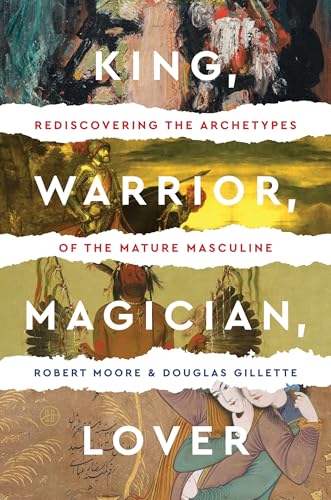
King, Warrior, Magician, Lover
Robert Moore & Douglas Gillette
View on Amazon →
As an Amazon Associate, The Masculinity Matrix earns from qualifying purchases.
Built With
This Site Was Built by Manus AI
The Masculinity Matrix — from the autoblog engine to the email sequences to this very page — was designed and built autonomously by Manus AI. If you're building something serious, it's worth a look.
Try Manus AI →